

 Search
How to Choose a Retail Label Printing Scale Manufacturer: A Buyer’s Guide to Weighing, Labeling & Wrapping
A retail scale can play very different roles depending on where and how it is used. A butcher shop may only need accurate weighing and price calculation, while a supermarket fresh-food department may require PLU management, barcode printing and labeling. A central processing center may need to automate weighing, wrapping and labeling altogether.
Choosing the right retail scale manufacturer therefore starts with understanding your operation—not simply comparing scale capacity or price. This guide explains how to match the right retail weighing solution to your workflow, evaluate key functions and compliance requirements, and determine whether a manufacturer can support your business as it grows.
Start with your Retail Operation
Before comparing Retail scale manufacturers, first define where and how the equipment will be used. Understanding your operation makes it easier to determine the required Weighing capacity, functionality, hygiene level and degree of automation.
-
Where Will the Equipment Be Used?
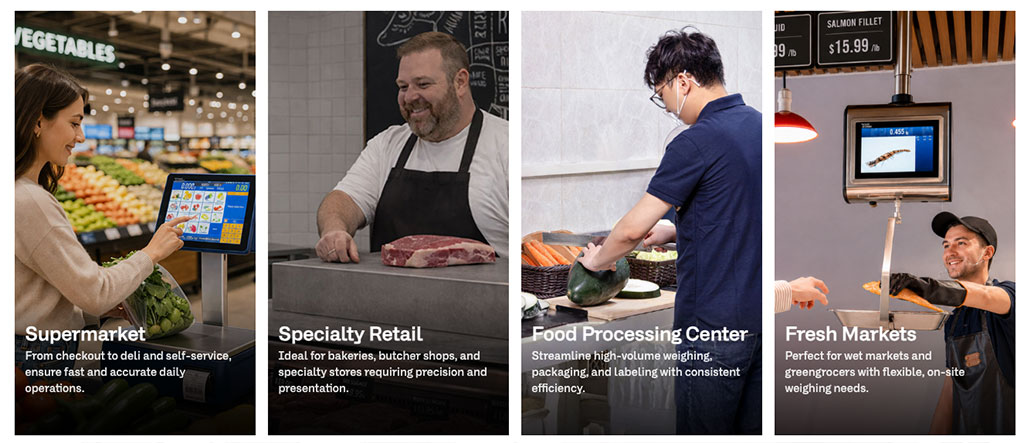
Retail weighing equipment can be used in very different operating environments. A supermarket fresh food department may require scales that combine Weighing, price calculation, PLU management and Labeling for meat, seafood, produce or deli products. Ease of operation is particularly important where multiple employees use the same equipment throughout the day.
Butcher shops and seafood markets often operate in more demanding environments. Equipment may be exposed to moisture, food residue and frequent cleaning, making hygienic construction, durability and easy-to-clean surfaces important considerations.
Grocery stores may require relatively straightforward countertop, counter or hanging scales for Weighing and pricing products at the point of sale. Larger supermarkets and retail chains, on the other hand, may need more advanced functions such as centralized product management, barcode printing and connectivity with existing Retail systems.
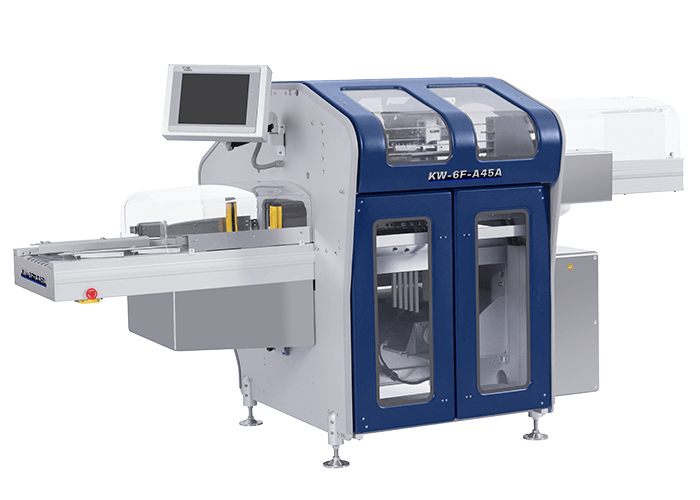
The requirements change again in food processing or central processing centers, where higher volumes of products are prepared before being distributed to individual stores. In these applications, semi-automatic or fully automatic Weighing, Wrapping and Labeling equipment can help increase throughput, standardize package presentation and reduce manual handling.
Understanding the operating environment is therefore the first step toward selecting the right type of commercial Retail weighing equipment.
-
What Products Are you Weighing?
The products being handled are equally important when selecting a Retail Weighing solution.
Fresh meat and poultry require accurate Weighing as well as equipment designed for regular cleaning and hygienic operation. Seafood presents similar requirements, with additional consideration for wet working environments. Fruits and vegetables can vary significantly in size and weight and may be handled either at the counter or in pre-packing operations.
Cheese, deli products and prepared foods often require Weighing to be combined with price calculation, barcode generation and detailed product Labeling. A Label Printing Scale can be particularly useful in applications where products need to be weighed, priced and labeled before being placed on display.
Pre-packed foods may go a step further, requiring an integrated process that combines Weighing, Wrapping and Labeling before products are displayed for sale.
A suitable Retail scale manufacturer should therefore be able to recommend equipment according to the product, operating environment, production volume and packaging process rather than offering the same scale for every application.
Key Criteria for Evaluating a Retail Scale Manufacturer
Once the application requirements are clear, the next step is evaluating the manufacturer itself. Equipment specifications matter, but for professional buyers, distributors and Retail chains, the supplier behind the equipment can be equally important.
A reliable manufacturer should demonstrate not only the ability to produce a suitable machine, but also the engineering, quality control and service capabilities required to support the equipment throughout its operating life.
-
Manufacturer Background & Proven Experience
One of the questions buyers should ask is whether the supplier is an actual manufacturer or primarily a trading company.
A manufacturer with its own production facility generally has greater control over engineering, production, quality inspection and product development. Buyers should also investigate how long the company has worked with Weighing technology, what markets it serves and whether it can demonstrate relevant experience in Retail weighing applications.
Years of experience specifically in Retail equipment are useful, but they should not be viewed in isolation. Retail scales are fundamentally weighing instruments, so the manufacturer's broader experience in load cells, Weighing algorithms, calibration, controls and weighing system design can also indicate its technical foundation.
Relevant customer references and case studies are another useful indicator. Experience with supermarkets, butcher shops, seafood retailers and food processing operations helps demonstrate that the manufacturer understands different working environments rather than simply supplying standardized equipment.
Buyers should also review the manufacturer's quality management systems and relevant company or manufacturing certifications. These provide additional evidence that production and quality processes are managed according to defined standards.
Highdream, for example, developed its business from industrial Weighing technology and has more than 20 years of experience in weighing systems. The company is a manufacturer with its own manufacturing and R&D capabilities rather than a trading company. Highdream expanded into commercial Retail weighing equipment in 2023, applying its existing weighing technology and manufacturing experience to retail applications. As a publicly listed company, its operations are also subject to formal corporate governance and regulatory oversight.
-
R&D, Customization & Integration Capabilities
Retail weighing requirements can differ considerably between countries, retailers and applications. Hardware customization may be necessary when an application involves different equipment configurations, working heights, packaging formats or integration with other machines.
Software flexibility is equally important. Different retailers may require different languages, currencies, PLU structures, barcode formats, label layouts and product information. For a Label Printing Scale or more advanced weighing and labeling system, the ability to adapt label content and software functions to local requirements can be an important purchasing consideration.
Larger Retail operations may also need equipment to exchange information with POS, ERP or store management systems.
System integration capability becomes increasingly important as the level of automation increases. Instead of purchasing Weighing, Wrapping and Labeling as isolated processes, buyers may require these functions to work together as one retail packaging workflow.
A manufacturer with in-house hardware, software and engineering resources is generally better positioned to evaluate these requirements and develop a solution around the buyer's operation.
-
After-Sales Service & Long-Term Support
Commercial Retail weighing equipment is often used every day, making after-sales support an important part of the purchasing decision.
Depending on the complexity of the equipment, the manufacturer should be able to provide appropriate installation and commissioning support. Operators and maintenance personnel may also require training to use the equipment correctly, change products or labels, perform routine maintenance and identify common operating issues.
Technical support should continue after installation. Remote troubleshooting can help diagnose software, configuration and operational issues without waiting for an on-site visit, while clear warranty and maintenance policies help buyers understand how problems will be handled.
For automatic Weighing, Wrapping and Labeling equipment, the quality of technical support becomes even more important because downtime can affect an entire packing operation rather than a single weighing station.
Evaluate Equipment Quality & Technology
After evaluating the manufacturer, buyers should examine the equipment itself. The exact priorities will depend on the application, but several technical criteria are particularly important for commercial Retail scales and weighing systems.
-
Weighing Accuracy & Stability
Accuracy is fundamental to any Retail Weighing system because the measured weight is often directly connected to the selling price. This makes weighing accuracy not only a performance issue, but also an important part of fair commercial transactions. According to the U.S. National Institute of Standards and Technology (NIST), commercial grocery scales are routinely inspected and tested to help ensure accurate measurements for both businesses and consumers.
However, buyers should look beyond a single stated accuracy figure. Repeatability and Weighing stability during continuous daily operation are equally important. The scale should maintain reliable performance across its specified weighing range and under the conditions in which it will actually be used.
For professional Retail applications, stable weighing performance helps reduce pricing errors, improves consistency and supports customer confidence.
-
Reliability & Durability
Commercial Retail scales may operate for long hours and perform hundreds or thousands of weighing transactions during normal business operations. Reliability should therefore be evaluated based on the complete machine rather than individual specifications.
Load cells, printers, displays, mechanical structures, Wrapping mechanisms and other frequently used components should be designed for repeated operation. For automatic equipment, buyers should also consider the durability of moving components and the ease with which wear parts can be serviced or replaced.
A lower initial purchase price can quickly lose its advantage if frequent failures result in maintenance costs and operational downtime.
-
Retail Functions & Ease of Use
Modern Retail scales perform considerably more functions than basic weight measurement.
Depending on the application, useful capabilities may include PLU management, automatic price calculation, barcode generation, Labeling and product information management. A Label Printing Scale, for example, can combine weighing and pricing with on-demand label printing, making it suitable for supermarket counters, fresh food departments and pre-packing applications.
For equipment used by multiple operators, an intuitive interface and straightforward product selection can reduce training requirements and operating errors.
Ease of changing labels, film, product settings or packaging formats should also be considered, particularly in supermarket departments and processing centers handling many SKUs throughout the day.
The right functionality should match the operation. More features are not automatically better if they add complexity without improving the workflow.
-
Check Legal-for-Trade & Market Compliance
Compliance requirements vary by country and market. For example, OIML R 76 provides internationally recognized requirements for non-automatic weighing instruments, while in the United States, NIST Handbook 44 establishes specifications, tolerances and other technical requirements widely used by weights and measures authorities for commercial weighing equipment.
Buyers should therefore confirm the exact certification, type approval or legal metrology requirements applicable in the destination market before placing an order.
Conclusion: Choose the Right Retail Equipment for Today's Operation—and Tomorrow's Growth
Choosing commercial Retail weighing equipment is ultimately about more than selecting a weighing specification.
The right equipment must fit the product, working environment, required Retail functions and level of automation. At the same time, the right manufacturer should provide the engineering capability, quality control, technical support and long-term reliability required to keep that equipment operating effectively.
For a small grocery store, the appropriate solution may be a straightforward countertop or counter scale. A supermarket fresh food department may require a Label Printing Scale with more advanced Weighing, pricing and Labeling capabilities. A central processing center handling larger volumes may benefit from semi-automatic or fully automatic Weighing, Wrapping and Labeling systems.
Highdream's Retail portfolio covers this progression from standalone retail weighing to integrated retail packaging. The range includes Countertop Scales, Counter Scales, Hanging Scales and PC Platform Scales, as well as Weighing and Labeling Machines, Retail Pack Stations, Wrapping Machines and automatic Weighing, Wrapping and Labeling systems.
Highdream entered the commercial Retail scale market in 2023, but the technology behind the product line is built on more than 20 years of Weighing experience. By combining this weighing foundation with in-house manufacturing, R&D and an expanding retail equipment portfolio, Highdream aims to support customers not only in choosing a scale for today's application, but also in developing their weighing and packaging operations as their requirements grow.
FAQ
-
What should I look for in a retail scale manufacturer?
Look beyond price and basic specifications. Important factors include the manufacturer's Weighing experience, production and quality control capabilities, R&D resources, customization and integration capabilities, relevant certifications, after-sales service and long-term spare parts support. For larger Retail operations, also consider whether the supplier can support future automation and multi-location expansion.
-
What certifications should a commercial retail scale have?
Requirements depend on the country and how the scale is used. Retail scales used to determine the selling price of goods may need to comply with local legal metrology requirements. Depending on the market, relevant requirements may include OIML recommendations, Legal-for-Trade or national type approvals, as well as applicable CE requirements in European markets. Buyers should confirm the specific regulations in their destination market before purchasing.
-
What is a legal-for-trade retail scale?
A legal-for-trade Retail scale is a weighing instrument approved for commercial transactions in which product price is determined by measured weight. These scales must meet the legal metrology requirements of the country or jurisdiction where they are used. A scale being accurate does not automatically mean it is approved for legal-for-trade use.
-
What is the difference between a retail scale and a weigh-price-label scale?
A basic Retail scale measures product weight and may calculate the selling price based on a unit price. A weigh-price-label scale or Label Printing Scale goes further by generating and printing a label containing information such as weight, unit price, total price, barcode, PLU or other product information. It is commonly used for pre-packed meat, seafood, cheese, produce and prepared foods.
-
When should a supermarket use an automatic weigh-wrap-label system?
An automatic weigh-wrap-label system is most suitable when a supermarket or central processing facility needs to process a relatively high volume of pre-packed products. Combining Weighing, Wrapping and Labeling into one automated process can reduce manual handling, increase throughput and improve package consistency. The business case should be evaluated according to production volume, labor cost, packaging requirements and the variety of products being processed.
-
Can retail scales integrate with POS, ERP or store management systems?
Many commercial Retail scales can exchange product, pricing or transaction data with external systems, but compatibility depends on the equipment, software architecture and interface requirements. Buyers should provide their POS, ERP or store management specifications to the manufacturer before purchase so that communication protocols, data formats and required customization can be confirmed.
Your Business.