

 Search
How to Reduce Labor Costs in Supermarkets: 5 Automation Strategies
How to Reduce Labor Costs in Supermarkets: 5 Automation Strategies
Labor shortages, rising wages, and increasing operational complexity continue to challenge supermarket operators worldwide. From checkout operations and product weighing to packaging and inventory handling, labor-intensive processes can significantly impact profitability and operational performance.
While reducing headcount may seem like an obvious solution, many leading retailers are focusing on a more sustainable approach: improving productivity through automation. By implementing smart retail technologies, supermarkets can streamline repetitive tasks, improve operational accuracy, and enable employees to focus on higher-value activities that enhance customer service and business performance.
Why Labor Costs Are Rising in the Retail Industry
Several factors are contributing to rising labor costs across the retail industry. Labor shortages, increasing wage expectations, employee turnover, and growing customer demands have made workforce management more challenging than ever. At the same time, supermarkets are handling increasingly complex operations that require employees to perform a wide range of tasks throughout the day.
Supermarket operations involve numerous labor-intensive tasks, including:
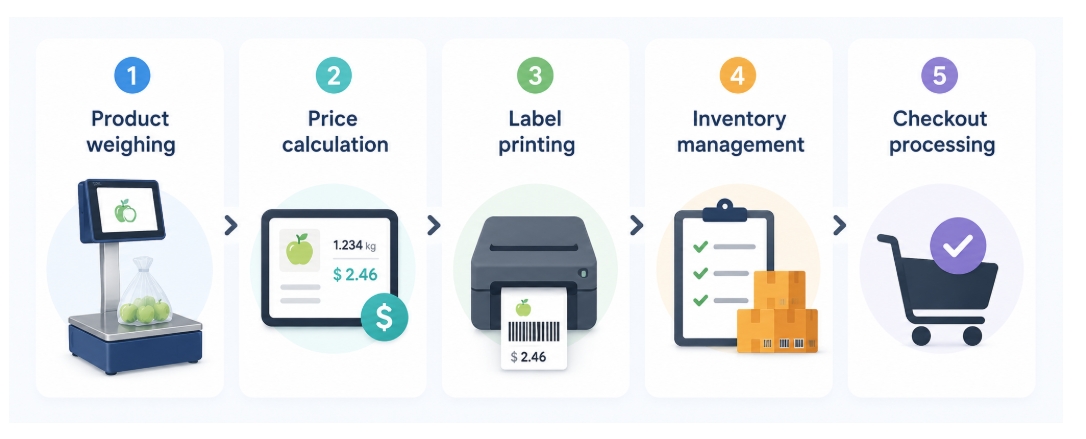
From weighing and labeling products to processing transactions and preparing fresh foods, these manual activities consume valuable labor hours. As operational costs continue to rise, retailers are looking for ways to improve efficiency without compromising service quality. This shift has accelerated the adoption of supermarket automation technologies designed to reduce repetitive work and optimize workforce productivity.
Where Do Supermarkets Spend the Most Labor Hours?
In daily supermarket operations, the largest share of labor hours is usually spent on shelf replenishment, fresh food handling, and checkout management. Employees spend significant time receiving goods, unpacking products, restocking shelves, preparing fresh foods, weighing items, printing labels, packaging products, and serving customers at checkout.
Fresh food departments such as produce, meat, seafood, bakery, and deli areas are especially labor-intensive because they require frequent weighing, labeling, packaging, and quality checks throughout the day. Checkout operations also require careful staffing to match peak customer traffic and avoid long queues.
By identifying the areas that consume the most labor hours, supermarkets can prioritize automation investments that deliver the greatest operational impact. From checkout and weighing processes to packaging and product handling, the following strategies help retailers reduce repetitive tasks, improve productivity, and control labor costs without compromising service quality.
-
Improve Checkout Efficiency with AI Self-Checkout Solutions
Checkout remains one of the most labor-intensive areas within supermarket operations. Traditional cashier lanes require dedicated staffing throughout store hours, and additional employees are often needed during busy periods to prevent long queues and customer frustration.
AI self-checkout systems help supermarkets improve transaction efficiency by allowing customers to identify, weigh, and purchase products independently. Using AI product recognition and computer vision technology, modern self-checkout solutions can automatically recognize fruits, vegetables, baked goods, and packaged products without requiring manual product searches. This not only reduces transaction times but also minimizes cashier dependency during peak shopping hours.
▶ Explore our AI-powered product recognition solutions for modern retail environments
-
Automate Weighing and Labeling Processes
Product weighing and labeling are essential tasks in fresh food departments, yet they often consume a significant amount of employee time. In produce, meat, seafood, bakery, and deli sections, staff are frequently required to weigh products, verify pricing, print labels, and update product information manually.
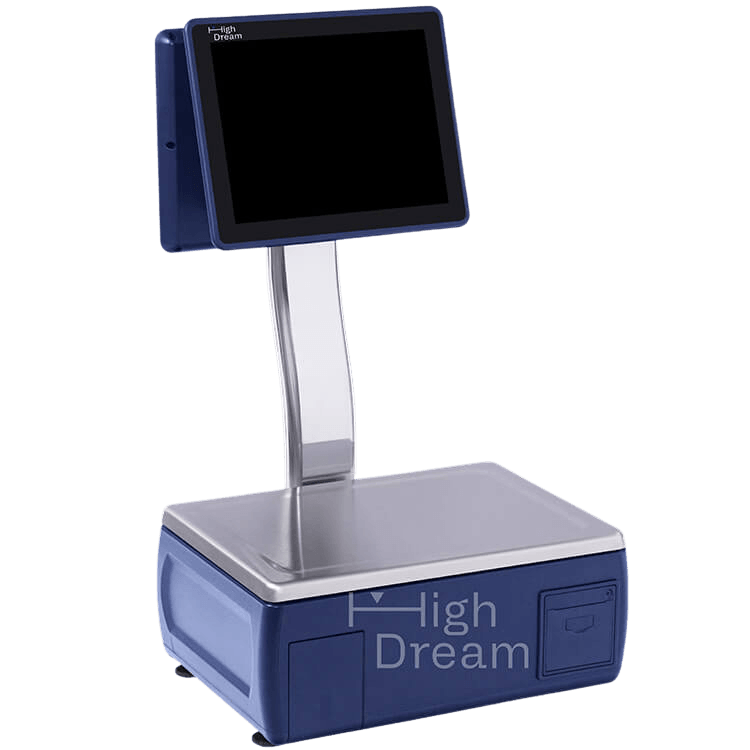
Smart weighing systems simplify these workflows by integrating weighing, barcode generation, label printing, pricing management, and product databases into a single solution. Rather than relying on multiple disconnected systems, retailers can automate repetitive tasks while improving operational consistency and pricing accuracy.
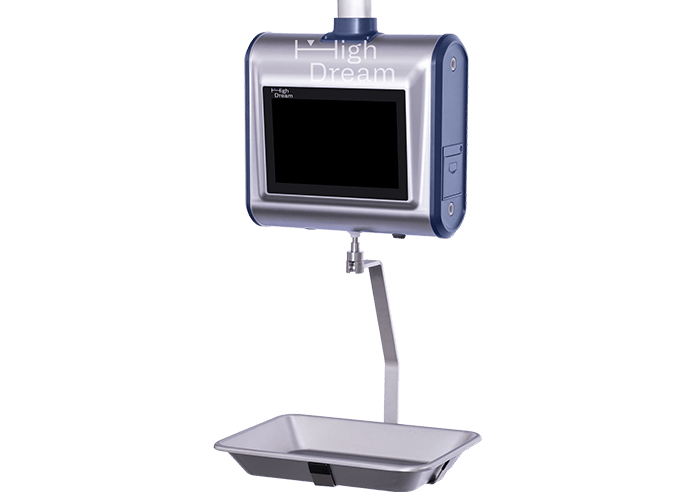
Many supermarkets are now adopting retail weighing solutions that connect directly with POS systems and inventory management platforms. This integration reduces manual data entry, improves workflow efficiency, and helps employees focus on customer-facing activities rather than administrative tasks. As part of a broader supermarket automation strategy, smart weighing technology can play a significant role in reducing labor requirements across fresh food operations.
-
Improve Operational Efficiency in Receiving and Bulk Product Handling
While checkout, weighing, and packaging processes often have the greatest impact on labor costs, operational efficiency in receiving and bulk product handling also plays an important role in maintaining smooth supermarket operations.
Large packaged goods, bulk products, and incoming shipments often require frequent weighing and labeling before entering storage or sales areas. Using equipment that is not designed for high-capacity applications can slow down workflows and create unnecessary bottlenecks for employees.
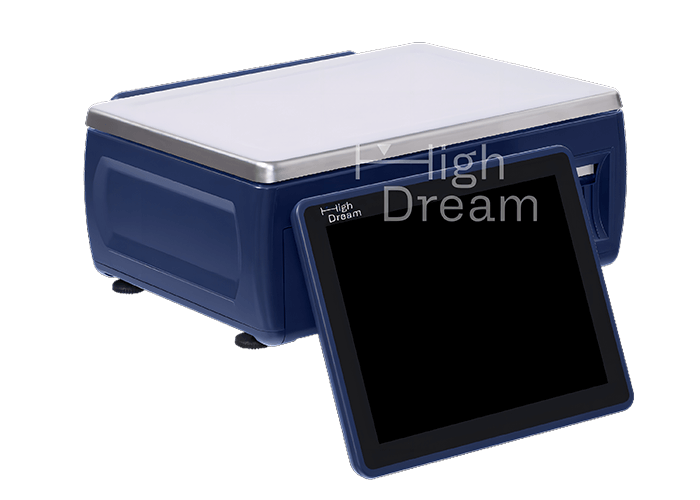
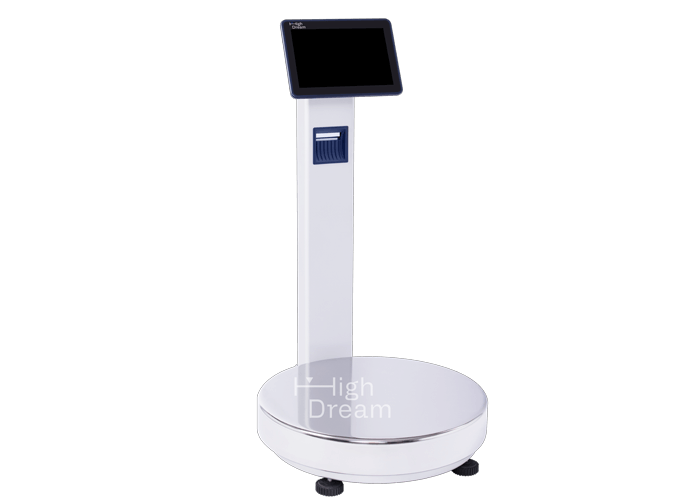
PC platform scales are designed to support these demanding tasks with high-capacity weighing performance, integrated labeling capabilities, and durable construction suitable for warehouse and backroom environments. Their moisture-resistant design also makes them well suited for fresh food storage areas and other challenging retail conditions where reliability is essential.
By improving weighing efficiency and reducing interruptions caused by equipment limitations, supermarkets can support smoother day-to-day operations while allowing employees to complete routine tasks more effectively.
-
Reduce Packaging Labor Through Automation
Fresh food packaging remains one of the most repetitive processes within supermarket operations. Departments handling meat, seafood, poultry, produce, and ready-to-eat products often require dedicated personnel to package, wrap, label, and prepare products for display.
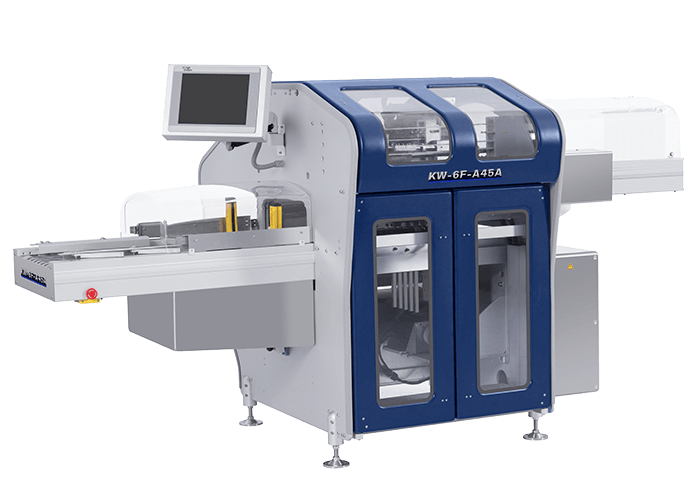
Automated Wrapping solutions help retailers streamline these processes while improving consistency and productivity. By reducing manual intervention, supermarkets can increase packaging speed, improve presentation quality, and minimize operator fatigue.
For businesses processing large product volumes each day, automated wrapping and packaging equipment can significantly reduce labor requirements while maintaining quality standards. When integrated with smart weighing and labeling systems, packaging automation becomes an important contributor to overall retail efficiency.
-
Minimize Human Error and Rework
Operational errors create hidden labor costs that many retailers underestimate. Incorrect labels, pricing discrepancies, inventory inaccuracies, and packaging mistakes all require additional time and resources to correct. These issues not only affect profitability but can also negatively impact customer trust.
Integrated retail automation solutions help standardize workflows across multiple departments, reducing reliance on manual input and improving operational consistency. Technologies such as AI product recognition, smart weighing systems, inventory management software, and automated packaging equipment work together to improve accuracy while reducing the need for corrective actions.
By minimizing errors and eliminating repetitive tasks, supermarkets can achieve greater efficiency while allowing employees to focus on activities that directly contribute to customer satisfaction and business growth.
Building a Smarter Retail Operation
The most successful supermarkets are no longer relying solely on manpower to improve performance. Instead, they are leveraging automation technologies to create smarter, more efficient operations that can adapt to changing customer expectations and labor market conditions.
From AI self-checkout systems and AI product recognition technology to smart retail scales, PC platform scales, automated packaging equipment, and inventory management solutions, modern retail technologies enable supermarkets to increase productivity while controlling labor costs. As the retail landscape continues to evolve, automation is becoming an essential investment for businesses seeking sustainable growth and competitive advantage.
FAQ About Supermarket Automation
Q1: How can supermarkets reduce labor costs without reducing staff?
A: Supermarkets can reduce labor costs by automating repetitive tasks such as product weighing, labeling, packaging, and checkout operations. Smart retail technologies help employees handle more tasks in less time, allowing stores to improve productivity without sacrificing customer service or reducing headcount.
Q2: How much can supermarkets save with automation?
A: The savings achieved through automation depend on factors such as store size, labor costs, transaction volume, and operational requirements. Many supermarkets improve workforce productivity, reduce manual workloads, minimize operational errors, and streamline daily processes through technologies such as AI self-checkout systems, smart weighing solutions, and automated packaging equipment.
Q3: Is AI self-checkout worth the investment for supermarkets?
A: AI self-checkout systems can reduce cashier workload, shorten checkout queues, and improve transaction speed. For supermarkets facing labor shortages or increasing labor costs, self-checkout technology can provide long-term operational and cost-saving benefits.
Q4: What are the biggest labor-intensive areas in supermarket operations?
A: Checkout operations, product weighing, labeling, fresh food packaging, and receiving processes are typically among the most labor-intensive activities in supermarkets. These areas are often the primary focus of retail automation initiatives.
Q5. What Is the ROI of Retail Automation Solutions?
A: The ROI of retail automation depends on factors such as store size, labor costs, transaction volume, and operational efficiency. Many retailers achieve measurable returns through lower labor expenses, reduced operational errors, faster processing times, and improved customer satisfaction.
Ready to improve supermarket efficiency and reduce labor costs?
Reducing labor costs is no longer simply about lowering staffing levels. The most successful retailers are investing in supermarket automation technologies that improve productivity, accuracy, and operational performance across the entire store.
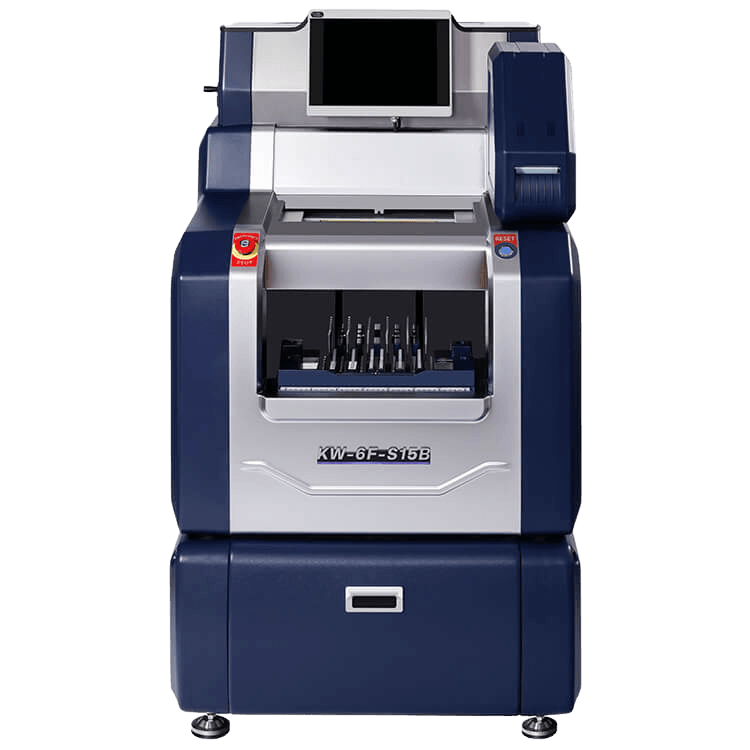
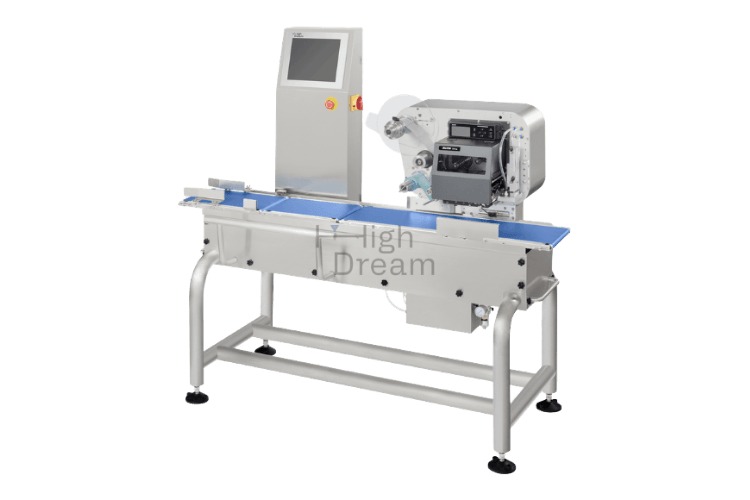
Highdream Retail provides intelligent retail automation solutions designed specifically for supermarkets, grocery retailers, fresh food operations, and retail chains worldwide. Our portfolio includes retail smart weighing systems, PC platform scales, automated wrapping equipment, tray sealer and labeling machines that help retailers streamline operations and improve efficiency.
Whether you are looking to optimize checkout performance, automate weighing and labeling processes, improve inventory control, or reduce packaging labor, our team can help you identify the right solution for your business.
▶ Explore Our Retail Solutions
▶ Contact Our Team
Your Business.